9 Natural Ways to Protect Your Hearing and Prevent Hearing Loss
Learn what science actually says about natural hearing health — from noise protection and diet to vitamins, sleep, and what doesn't work. Updated 2026.


Most hearing loss cannot be reversed naturally, but the majority of it is preventable. No supplement, herb, or exercise can regrow damaged inner-ear hair cells, but research consistently shows that nine evidence-backed habits can dramatically lower your risk of hearing loss and slow age-related decline:
- Protect your ears from noise above 85 dB
- Eat a Mediterranean or DASH-style diet
- Get adequate folate, B12, magnesium, zinc, and antioxidants
- Exercise regularly
- Sleep 7-9 hours and treat sleep apnea if present.
- Know which medications are ototoxic and ask about monitoring.
- Don't smoke
- Manage chronic stress
- Practice safe ear hygiene
Medical disclaimer: This article is for educational purposes only and is not medical advice. Always consult an audiologist or qualified healthcare provider with questions about your hearing, before starting supplements, or before changing medications.

Can Hearing Loss Be Reversed Naturally?
The short answer: it depends on the type. Hearing loss falls into three categories, and only one is naturally reversible.
Conductive hearing loss is caused by blockages in the outer or middle ear: earwax, fluid, or infection. Removing the blockage usually restores hearing.
Sensorineural hearing loss is caused by damage to the cochlear hair cells or auditory nerve. Once these microscopic hair cells die, the body cannot regenerate them. This is the most common form of permanent hearing loss and the type that no diet, supplement, herb, or essential oil has been clinically shown to reverse.
Mixed hearing loss combines both forms.
According to the World Health Organization, more than 1.5 billion people worldwide live with some degree of hearing loss, and about 430 million of those cases are disabling.
The encouraging news: most of the risk factors for hearing loss are modifiable. What you can do is protect the hearing you have, slow age-related decline, and reduce your overall risk.
Gene therapy and hair-cell regeneration trials are showing real promise (more on that below), but they aren't yet standard treatments. Prevention is still the best medicine.
9 Natural Ways to Protect Your Hearing
1. Protect Your Ears from Noise

Noise exposure above 85 dB is the leading preventable cause of permanent hearing loss.
Noise-induced hearing loss (NIHL) is completely preventable. The National Institute on Deafness and Other Communication Disorders (NIDCD) confirms that prolonged exposure to sounds at or above 85 decibels causes permanent cochlear hair cell damage.
For context:
- Normal conversation: ~60 dB
- Busy traffic: ~85 dB
- Live concerts: 100-120 dB
- Headphones at maximum volume: 94-110 dB
Over 1 billion young people aged 12-35 are at risk of NIHL from unsafe listening practices, according to WHO data. In the US, about 5.2 million children and adolescents (12% of that age group) already have permanent damage from excessive noise exposure.
What to do:
- Wear high-fidelity earplugs (Loop, Etymotic, Eargasm) at concerts, sporting events, or any venue above 85 dB. They reduce volume without distorting sound.
- Follow the 60/60 rule for headphones: no more than 60% volume for no more than 60 minutes at a stretch.
- Use noise-cancelling headphones as they let you listen at lower absolute volumes by removing background noise.
- Move away from the sound source. Every doubling of distance cuts exposure by roughly 6 dB.
- Wear hearing protection at work, especially in construction, manufacturing, mining, military service, and farming.
In 2024, Apple released hearing health features for AirPods Pro 2 (and now Pro 3) that include real-time hearing protection, a clinical-grade at-home hearing test, and an FDA-cleared hearing aid mode for mild-to-moderate loss, the first end-to-end consumer hearing health system approved by a regulator.
2. Eat a Hearing-Healthy Diet

Healthy dietary patterns are associated with up to a 30% lower risk of hearing loss.
The blood vessels and nerve cells of the inner ear are uniquely vulnerable to inflammation and poor circulation, both of which are heavily influenced by diet. A 2025 systematic review in Frontiers in Nutrition found multiple dietary patterns and individual nutrients are significantly linked to lower hearing-loss risk.
Women who followed DASH, Mediterranean, or Alternate Healthy Eating Index dietary patterns had at least a 30% lower risk of hearing loss compared to women with the poorest dietary habits.
Foods to prioritize:
- Fatty fish (salmon, sardines, mackerel) for omega-3s, which preserve cochlear blood flow and reduce inflammation. Two-plus servings per week is associated with lower hearing-loss risk.
- Leafy greens (spinach, kale) for folate and antioxidants. Folate metabolizes homocysteine, an amino acid that constricts cochlear blood vessels.
- Citrus and berries for vitamin C and E, both linked to lower risk in 2025 meta-analyses.
- Nuts and seeds for magnesium and zinc, which protect hair cells from noise-induced free-radical damage.
- Legumes for zinc, repeatedly tied to reduced hearing-loss risk.
- Bananas and sweet potatoes for potassium, which regulates inner-ear fluid balance.
Foods to limit: A diet high in sugar and refined carbs raises blood glucose, damaging inner-ear vessels over time. Obesity and type 2 diabetes are both independently associated with significantly higher rates of hearing loss.
3. Vitamins and Supplements

Certain nutrients are linked to lower hearing-loss risk, but none can reverse damage.
These are the supplements with the strongest evidence base, but none are a cure, and all work best as part of a broader healthy lifestyle.
Folate (B9): Older women with hearing loss were found to have 31% lower folate levels than those with normal hearing. According to the American Journal of Clinical Nutrition: “Age-related hearing loss, vitamin B-12, and folate in elderly women”. Folate is available in leafy greens, legumes, and fortified cereals.
Vitamin B12: Deficiency is linked to cochlear nerve degeneration. Vitamin B12 is available in meat, fish, dairy, and eggs.
Vitamins C and E: A Systematic Review shows that these antioxidants help protect against damage from noise and aging, with research linking higher intake to lower hearing-loss risk.
Magnesium: Low levels may increase vulnerability to noise damage, while supplementation (especially with antioxidants) may help protect the inner ear. Magnesium is naturally available in leafy greens (spinach, Swiss chard), nuts (almonds, cashews), seeds (pumpkin seeds), whole grains, legumes, and dark chocolate.
Zinc: Concentrated in the cochlea and tied to lower hearing-loss risk in meta-analyses. Zinc is available in shellfish (especially oysters), red meat, poultry, beans, nuts, seeds, whole grains, and dairy.
Omega-3s: Regular intake is associated with reduced age-related decline. Foods containing Omega 3 include fatty fish (salmon, mackerel, sardines, tuna), flaxseeds, chia seeds, walnuts, and algae.
Ginkgo biloba: A 2023 meta-analysis found possible benefit as an add-on therapy for sudden sensorineural hearing loss, but evidence quality was rated low. Not proven for prevention in healthy people.
Always check with your doctor before adding supplements, especially if you take other medications.
4. Exercise Regularly

Physical activity preserves the cochlea's blood supply and slows age-related decline.
The cochlea relies on a steady supply of oxygen and nutrients delivered through tiny blood vessels. When circulation is compromised, these delicate structures suffer. A 2023-2024 review found that regular physical activity may increase cochlear blood flow and help preserve hair-cell function.
Adults who engage in regular aerobic activity have lower rates of age-related hearing decline. Even moderate activity like walking, gardening, and swimming is associated with measurable benefits. Aim for the standard 150 minutes of moderate activity per week.
Exercise also reduces the risk of type 2 diabetes and cardiovascular disease, both independent risk factors for hearing loss.
5. Prioritize Sleep

Poor sleep and untreated sleep apnea raise the risk of hearing loss.
Sleep deprivation may damage cochlear hair cells and reduce auditory signal processing efficiency. People with sleep apnea — whose oxygen drops repeatedly throughout the night — have significantly higher rates of hearing loss. The cochlea responds to oxygen deprivation in ways similar to noise injury.
What to do:
- Aim for 7-9 hours of quality sleep per night.
- Get screened for sleep apnea if you snore heavily, gasp during sleep, or wake up tired. Treating apnea protects both your heart and your hearing.
- Avoid wearing earplugs every night as they can trap moisture and raise infection risk. Use them situationally for noisy environments.
6. Be Aware of Ototoxic Medications

Over 200 medications are known to damage hearing, sometimes permanently.
The most common culprits include:
- Aminoglycoside antibiotics (gentamicin, tobramycin, kanamycin): 3-50% of patients experience irreversible hearing loss.
- Platinum chemotherapy (cisplatin, carboplatin): 40-60% of patients experience hearing loss; 18% develop severe-to-profound loss.
- Loop diuretics (furosemide, ethacrynic acid): can cause profound permanent loss at high doses, especially combined with aminoglycosides.
- High-dose aspirin and NSAIDs: can cause reversible tinnitus and hearing loss; NSAIDs are the most common ototoxic drug in older adults.
- Quinine: linked to tinnitus and hearing loss.
What to do: Tell every prescriber if you have hearing loss before starting a new medication. Ask whether baseline and follow-up audiometry (ototoxicity monitoring) is recommended. Never stop a prescribed drug on your own, but report ringing, muffled hearing, or dizziness immediately.
7. Don't Smoke (and Drink Mindfully)

Past smokers with 20+ pack-years have a 30% higher relative risk of hearing loss; current smokers, 21% higher.
A large prospective study of women published in the American Journal of Preventive Medicine found a clear dose-response relationship between cumulative smoking and hearing loss.
The mechanisms are well-understood: nicotine causes vasospasm in cochlear blood vessels, reduces oxygen delivery via increased carboxyhaemoglobin, increases blood viscosity, and triggers oxidative stress that damages outer hair cells.
Smoking's effect is strongest on high-frequency hearing, exactly the range responsible for understanding speech consonants.
The good news: hearing-loss risk drops measurably after quitting. Within a decade of cessation, former smokers' risk approaches that of never-smokers.
Heavy alcohol use is also associated with both sensorineural and "cocktail party" hearing difficulties. Moderate consumption (up to one drink per day for women, two for men) is generally not tied to hearing harm in the literature, but binge drinking and chronic heavy use are.
What to do:
- If you smoke, quitting is the single highest-impact change you can make for your hearing, your heart, and your lungs.
- Avoid secondhand smoke. Children exposed to it have higher rates of ear infections and hearing loss.
- Keep alcohol intake within published limits.
8. Manage Stress and Mental Health

Chronic stress is increasingly recognized as a risk factor for both gradual and sudden hearing loss.
A study of patients with idiopathic sudden sensorineural hearing loss (SSNHL) found that 81% reported greater-than-normal stress on at least one measure before onset. Under stress, the hypothalamic-pituitary-adrenal axis releases cortisol, which constricts blood vessels, including the tiny vessels supplying the cochlea. Recent 2024-2025 research shows that abnormal stress-hormone release increases susceptibility to hearing disorders and may even worsen recovery from sudden hearing loss.
Stress is also one of the most common triggers for tinnitus flare-ups, and the relationship is bidirectional: tinnitus increases stress, which worsens tinnitus.
What to do:
- Build regular stress-reduction practices into your routine: meditation, breathwork, time outdoors, or simply protected downtime.
- Treat anxiety and depression as both are independently associated with worse hearing outcomes and worse tinnitus.
- Stay socially connected. Loneliness and isolation are linked to cognitive decline and worse hearing-aid outcomes once intervention is needed.
- Consider cognitive behavioral therapy (CBT) if tinnitus or hearing-related stress is interfering with sleep or daily life. CBT has the strongest evidence of any tinnitus treatment.
9. Practice Safe Ear Hygiene
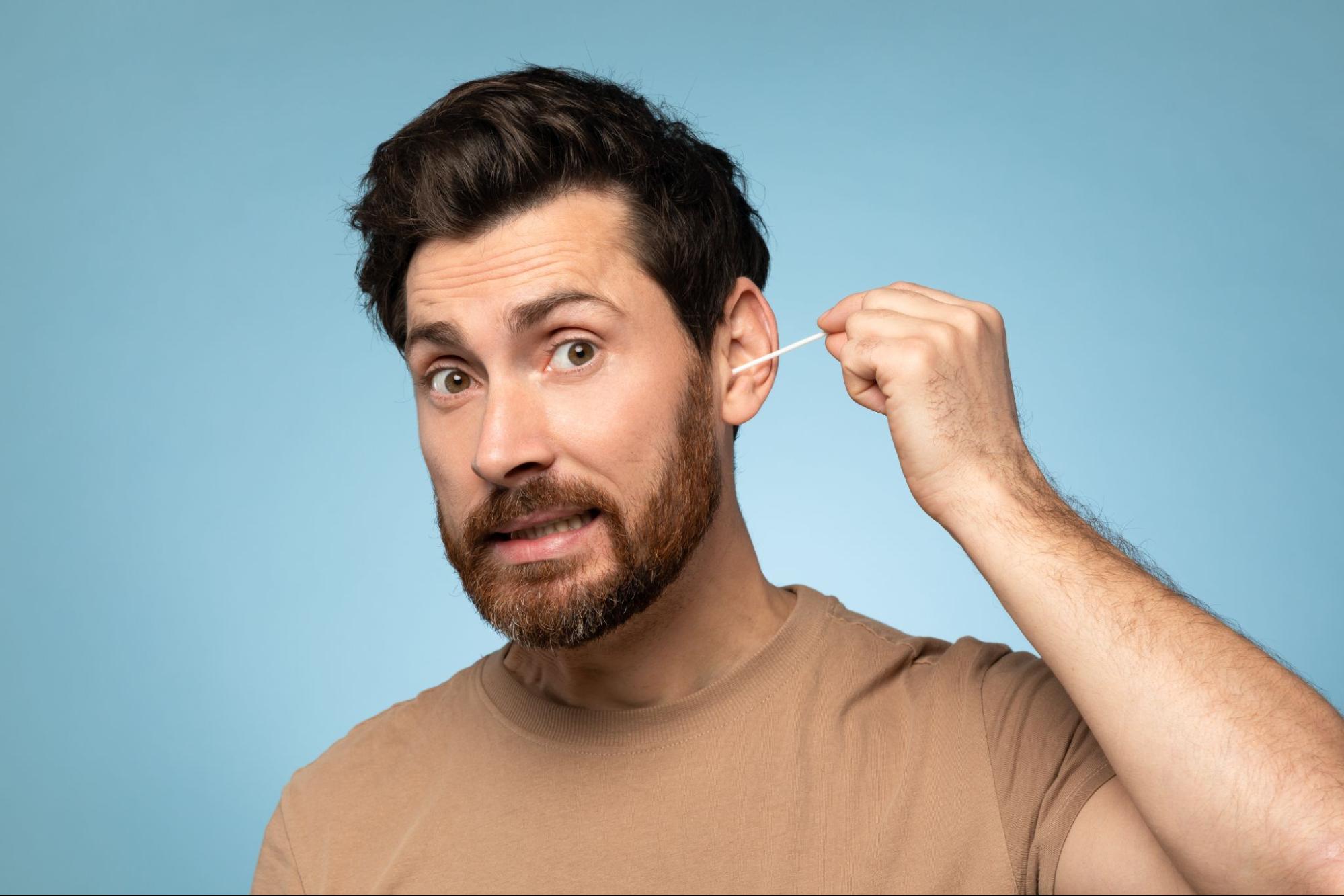
Skip the cotton swabs because your ears clean themselves.
It feels intuitive that cleaner ears mean healthier ears, but using Q-tips inside the ear canal is one of the most common preventable causes of hearing problems. Cotton swabs push the majority of earwax deeper into the canal rather than removing it, leading to cerumen impaction, which causes hearing loss, fullness, itching, tinnitus, and otitis externa. They're also the single most common cause of ruptured eardrums.
Earwax isn't dirty. It traps debris, slows bacterial growth, and naturally migrates outward as you talk and chew.
What to do:
- Clean only the outside of the ear with a damp cloth.
- If you feel impacted wax, soften it with a few drops of mineral oil, baby oil, or glycerin for a couple of days, then gently irrigate with warm water using a bulb syringe.
- For stubborn impactions, see a clinician and never try to dig wax out with sharp tools.
- If you wear hearing aids, ask your audiologist about routine cleaning to prevent both wax buildup and aid damage.
- Treat ear infections promptly. Repeated untreated infections can scar the eardrum and lead to permanent conductive loss.
Common Myths About Natural Hearing Remedies
Most "natural hearing cures" online have no scientific evidence — and some can cause harm.
- Essential oils (tea tree, cajeput, lavender): No peer-reviewed clinical evidence supports any essential oil for restoring hearing. Putting oil into the ear canal can trap moisture and cause infections. The American Academy of Audiology has explicitly addressed this.
- Ginger tea: Anti-inflammatory in general, but no clinical trials link it to hearing benefits.
- "Hearing exercises": Auditory training helps the brain adapt to hearing aids and improves speech discrimination. It does not repair cochlear hair cells.
- Hydrogen peroxide drops: Useful only for softening earwax. Excessive use irritates the ear canal.
Emerging Research: What's Coming Next
Real progress is being made on treatments that could one day reverse sensorineural hearing loss.
- Gene therapy: A 2025 Chinese clinical trial reported that a single gene-therapy injection dramatically restored hearing in children with mutations in the OTOF gene, a common cause of congenital deafness. Improvements were measurable within one month.
- Cell therapy: Rinri Therapeutics' Rincell-1 aims to restore connections between the inner ear and the brain; first-in-human trials for severe age-related hearing loss and auditory neuropathy began in 2025.
- Hair-cell regeneration: A Phase I/IIa trial published in Nature Communications in 2024 showed that a gamma-secretase inhibitor (LY3056480) delivered to the inner ear induced hair-cell regeneration and partially restored hearing in adults with mild-to-moderate sensorineural loss.
These aren't yet standard treatments, but they're the most significant progress toward reversing sensorineural hearing loss in decades.
When to See an Audiologist
Natural prevention works best alongside professional care. See an audiologist if:
- You frequently ask people to repeat themselves
- You struggle to follow conversations in noisy environments
- You hear ringing, buzzing, or hissing in your ears (tinnitus)
- You've been exposed to a sudden loud noise
- You're starting a medication known to be ototoxic
- You haven't had a hearing test in the past five years (and you're over 50)
The American Speech-Language-Hearing Association (ASHA) recommends adults have their hearing checked at least every 10 years up to age 50, and every 3 years thereafter. Most hearing loss is gradual; regular testing catches changes early, when intervention is most effective.
Natural Ways to Protect Your Hearing and Prevent Hearing Loss FAQs
Can hearing loss be reversed naturally?
Most permanent hearing loss, particularly sensorineural loss caused by damaged cochlear hair cells, cannot be reversed naturally. No food, supplement, herb, or exercise can regenerate these cells. However, conductive hearing loss caused by earwax, fluid, or infection is often reversible when the underlying cause is treated.
What vitamins are good for hearing health?
The strongest evidence supports folate (B9), vitamin B12, vitamins C and E, magnesium, and zinc. A 2025 meta-analysis confirmed that higher intake of vitamins C, E, and beta-carotene is significantly associated with lower hearing-loss risk.
What foods improve hearing?
No single food "improves" damaged hearing, but these are linked to lower hearing-loss risk: fatty fish (omega-3s), leafy greens (folate), citrus and berries (vitamins C and E), nuts and seeds (magnesium, zinc), legumes (zinc), and bananas (potassium). Mediterranean and DASH dietary patterns show up to 30% lower risk.
Does exercise help hearing?
Yes. Regular aerobic exercise improves blood flow to the cochlea and is consistently linked with lower rates of age-related hearing decline. About 150 minutes of moderate activity per week provides measurable benefits.
How loud is too loud for my ears?
Sound at or above 85 dB can cause permanent hearing damage with prolonged exposure. At 100 dB (a live concert), damage can occur in as little as 15 minutes. At 110 dB, just two minutes can cause harm. A practical rule: if someone an arm's length away can't hear you over your music, it's too loud.
Does ginkgo biloba help with hearing loss?
Evidence is mixed and limited. A 2023 meta-analysis found possible benefit as an add-on for sudden sensorineural hearing loss, but evidence quality was low. It has not been shown to prevent hearing loss or help with age-related decline in healthy people.
Do essential oils help with hearing loss?
No. There is no peer-reviewed clinical evidence that any essential oil like tea tree, cajeput, lavender, or others, improves hearing. Placing oils in the ear canal can cause infection.
Does smoking really cause hearing loss?
Yes. Smokers have 20-30% higher hearing-loss risk compared to never-smokers, and the risk rises with pack-years. Nicotine constricts cochlear blood vessels, reduces oxygen delivery, and triggers oxidative stress in hair cells. Risk drops measurably within a decade of quitting.
Can stress cause hearing loss?
Chronic stress and elevated cortisol constrict the small blood vessels supplying the inner ear. Sudden sensorineural hearing loss (SSNHL) is associated with psychological stress, and 81% of SSNHL patients in one study reported unusual stress before onset. Stress is also a top trigger for tinnitus flare-ups.
Are Q-tips bad for your ears?
Yes, for the inside of the ear. Cotton swabs push earwax deeper, cause impaction, and are the most common cause of ruptured eardrums. The outer ear is fine to wipe with a cloth, but never insert anything into the ear canal.
How can I clean my ears safely?
For most people, the ear cleans itself. If you feel waxy fullness, soften wax with a few drops of mineral or baby oil for a couple of days, then irrigate gently with warm water from a bulb syringe. For stubborn impactions, see a clinician.
What causes hearing loss in young people?
The leading cause is unsafe listening through headphones and earbuds. WHO estimates over 1 billion people aged 12-35 are at risk. Earbuds at maximum volume can reach 94-110 dB, well above the 85 dB damage threshold.
Is tinnitus the same as hearing loss?
No, but they often co-occur. Tinnitus is the perception of ringing, buzzing, or hissing without an external source. It's often caused by the same hair-cell damage that causes hearing loss and is frequently an early warning sign.
What is the 60/60 rule for headphones?
Listen at no more than 60% volume for no more than 60 minutes at a time before taking a break. The WHO recommends it as a practical rule of thumb for personal-audio devices.
Can I sleep with earplugs every night?
Occasional use is fine; nightly use can trap moisture and slightly raise infection risk. If you need consistent noise control to sleep, consider treating the noise source (white-noise machine, soundproofing) instead.
Can high blood pressure cause hearing loss?
Yes. Uncontrolled hypertension damages the tiny vessels supplying the cochlea. People with poorly controlled blood pressure have higher rates of both sensorineural hearing loss and tinnitus.
Does diabetes cause hearing loss?
Yes. Diabetes is associated with strial atrophy, loss of spiral ganglion neurons and outer hair cells, and basilar membrane thickening. People with diabetes are roughly twice as likely to have hearing loss as those without.
Does drinking alcohol affect hearing?
Heavy and chronic alcohol use is linked to sensorineural and "cocktail party" hearing difficulties. Moderate drinking within published limits has not been clearly linked to hearing harm.
How often should I get a hearing test?
ASHA recommends one test in your 20s, one in your 30s, and every 10 years up to age 50, then every 3 years after. Test more often if you have a noisy job, family history of hearing loss, diabetes, or frequent ear infections.
Can I improve my hearing with practice or training?
You can improve your listening skills and speech discrimination through auditory training, which is especially useful after getting hearing aids or cochlear implants. But it cannot repair damaged hair cells or reverse sensorineural hearing loss. Think of it as brain training, not ear repair.
What is the most effective way to prevent hearing loss?
Protecting your ears from noise. NIHL is entirely preventable. Wear hearing protection in loud environments, use safe listening volumes with headphones, and move away from loud sound sources. Diet, exercise, no smoking, stress management, and good ear hygiene add important additional layers.
The Bottom Line
You can't undo sensorineural hearing loss, but you can stack the deck in your favor. Protect your ears from noise, eat for circulation, move your body, sleep well, manage stress, skip the cigarettes, leave your earwax alone, and pay attention to medication side effects. If you're noticing changes, even subtle ones, see an audiologist. Most hearing loss is gradual, and the earlier it's detected, the more you can do about it.
This article is for informational purposes only and does not substitute for professional medical advice. Consult a qualified healthcare provider for personalized guidance.


Copywriter based in Miami, FL. Leads copywriting workshops and mentors women entrepreneurs at the Idea Center of Miami Dade College.